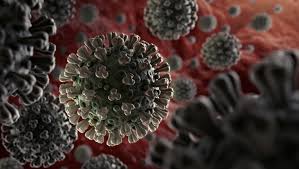
STAT+ and Executive Education at Harvard Medical School have teamed up to hold a free, 4-part digital event series “Confronting a Pandemic,” which starts May 7, 2020 and discusses a range of issues from the rapid deployment of telehealth to drugs and vaccines aimed at COVID-19. See Eventbrite link for more information and to sign up.
Events
COVID webinar: New England Science Writers hosts Roby Bhattacharyya, MD, PhD

Join NESW’s webinar on May 5, 2020 at 6pm led by Dr. Roby Bhattacharyya, a Broad Institute researcher and attending physician at MGH, will discuss the Broad’s efforts in diagnostics and research related to COVID-19 and share perspectives from his recent time on the infectious disease consult service at MGH. He will address the unique challenges this pandemic has posed for clinicians, how developments in basic science have shaped the clinical response, and how the Broad is approaching the most pressing challenges facing the clinical and basic research communities.
The 2020 NESW Winter Social
You are invited to mingle with other science writers and enjoy a hearty dinner at the Burren in Somerville on Wednesday, Jan. 8, 2020. Social hour begins at 6 pm with dinner around 7 pm. For the menu and to register, go to link below.
NESW members tour “living museum”
Did you know that the Arnold Arboretum is home to some 16,000 specimen plants cared for by only four arborists? Or that the Dawn Redwood, the emblem of this “living museum,” is considered to be a living fossil, once thought to be extinct? (The arb is home to some 200 of these beauties.)
On a Saturday in late October, NESW members learned these facts and much more in a great tour led by Brad McGrath, a docent at the arb.
“We had a gorgeous fall day and a very enthusiastic, knowledgeable guide. About a dozen of us strolled past many kinds of trees and learned a lot about what does well in what conditions, and the history of the arboretum,” said Richard Saltus, a senior science writer at the Dana-Farber Cancer Institute.
Among those trees and shrubs: an Amur Cork Tree that was a gift from the czar of Russia; the Paperbark Maple, a favorite of many arb employees, including Brad; and the oldest documented Franklinia, otherwise known as the Ben Franklin tree (it was named after Franklin, who according to Wikipedia was a great friend of the discoverer’s father).
Brad also shared many great tips about growing trees and learning more about them. For example, he noted that you don’t have to plant large, older trees; smaller, younger ones will quickly catch up in height and vigor.
If you’d like to learn more about a specific plant, make sure to check out the information on its metal tag. Also consult the Arboretum Explorer, an interactive map that can be accessed from your laptop or your phone’s browser. Type in the plant’s ID number or name, and you can find its exact location in the arb, when it was planted, growing conditions, and much more.
NESW plans to offer this tour again, perhaps twice a year to take advantage of the seasons. Watch the NESW listserv or our Facebook page for updates.
–Elizabeth Thomson
Arboretum scientist: the mystery of the quaking aspens
Along the Niobrara River in Northern Nebraska lives a grove of aspens that until recently posed a mystery to plant biologists including Jake Grossman, a Putnam Fellow at the Arnold Arboretum in Jamaica Plain, Mass.
Grossman described that mystery and how he helped solve it at the NESW’s latest “Pizza with a Scientist” event on January 15.
Quaking or Bigtooth?
The conundrum? The Niobrara trees don’t look like quaking aspens, the only species that lives anywhere close by. Locals — including Buffalo Bruce MacIntosh, an environmentalist and aspen aficionado — believed they were hybrids, or a cross between quaking aspens and bigtooth aspens. But the closest bigtooths thrive in the east, several hundred kilometers away.
Grossman’s work with Drs. Nick Deacon and Jeannine Cavender-Bares from the University of Minnesota on the genetics of the trees conclusively showed that they are indeed hybrids. His hypothesis is that they are relics from some 4,000 years ago when the climate supported both species. As a result, his work also explores the effects of climate change on temperate trees.
Grossman is now working with the maples at the arboretum — the most important collection of that species in the world, according to Arnold Arboretum director Ned Friedman, who briefly joined our group. Grossman aims to study how drought tolerance has developed in maples over thousands of years. The results, he said, could help evaluate their current vulnerability and create tools to make decisions about what to plant and where.
Research at “the Arb”
Friedman noted that the arboretum’s Weld Hill facility — where we met for Grossman’s talk — is home to many different research projects related to plants, from genomics to climate change. In 2017 some 90 projects were underway. He invited NESW members to subscribe to his blog, which features photos that are available for non-profit use, and to feel free to contact the Arb for any additional information.
~ Elizabeth Thomson
Image: NESW member Eric Smalley (left) with Arnold Arboretum Jake Grossman. The two sit behind a table made from a black walnut that was a specimen tree at the Arb for many years before it had to be cut down.